Case 05 — .DSGN · 3D
Render Lab
Objects that don’t exist yet, lit as if they always had. Glass, crystal, fur and type, built in Blender one study at a time.
- Role
- 3D art direction
- Responsibilities
- Modeling, look development, lighting, render
- Deliverables
- Stills, loops
- Collaboration
- Self-initiated
- Year
- 2021 — 2024
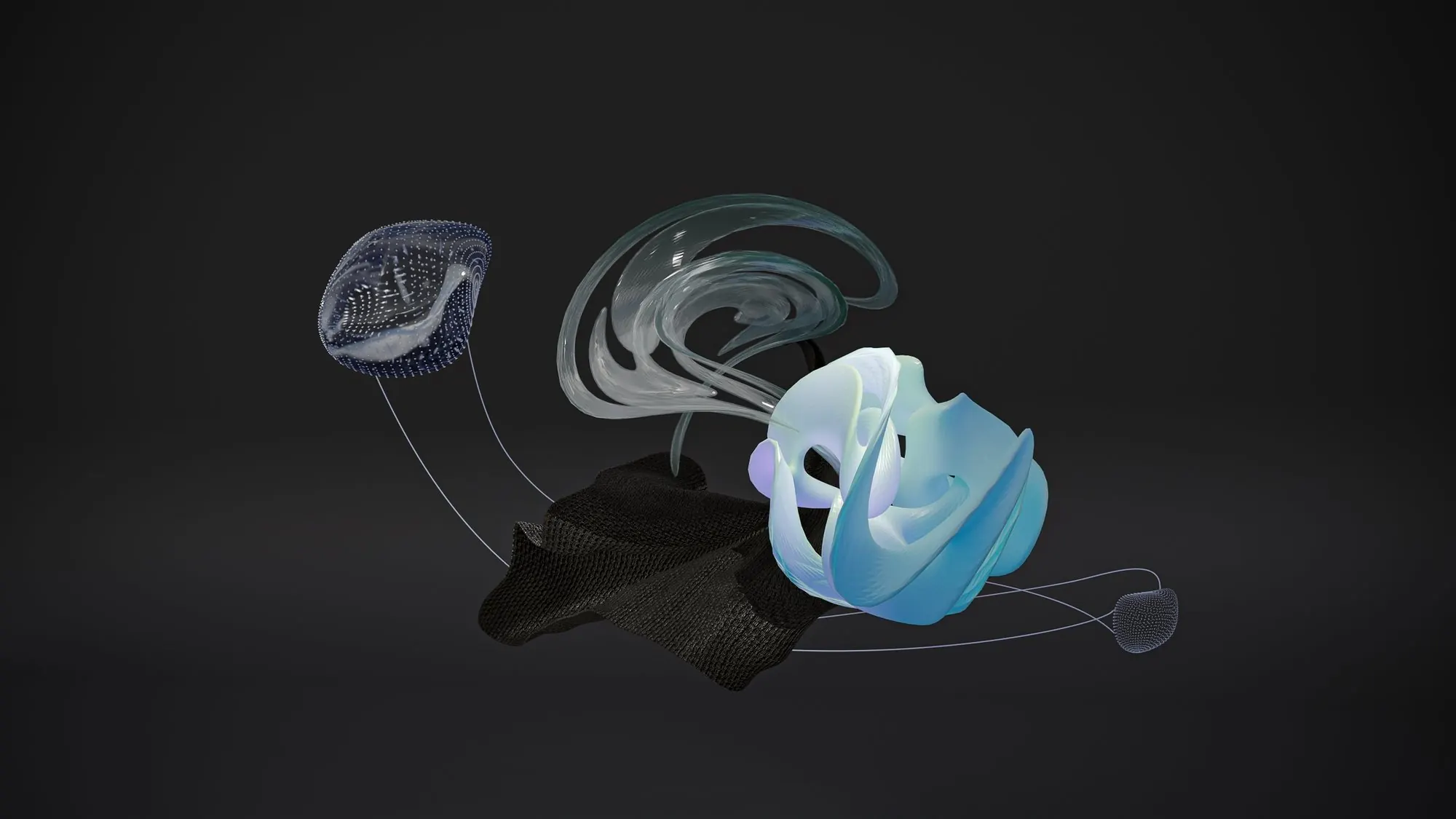
In 3D we design the light as much as the shape. Every study chases one thing: a material that feels real enough to touch.
Why 3D
Images we can’t photograph
Glass that bends a room, crystal that grows around a letter, fur that reacts to light. 3D lets us build the picture first and decide later where it lives: a cover, a poster, a brand.
How we work
One question per render
Each piece starts as a test: how thick the glass, how sharp the reflection, how much the camera forgives. We keep the answers and carry them to the next one.
Glass
Thickness, dispersion and a few scratches
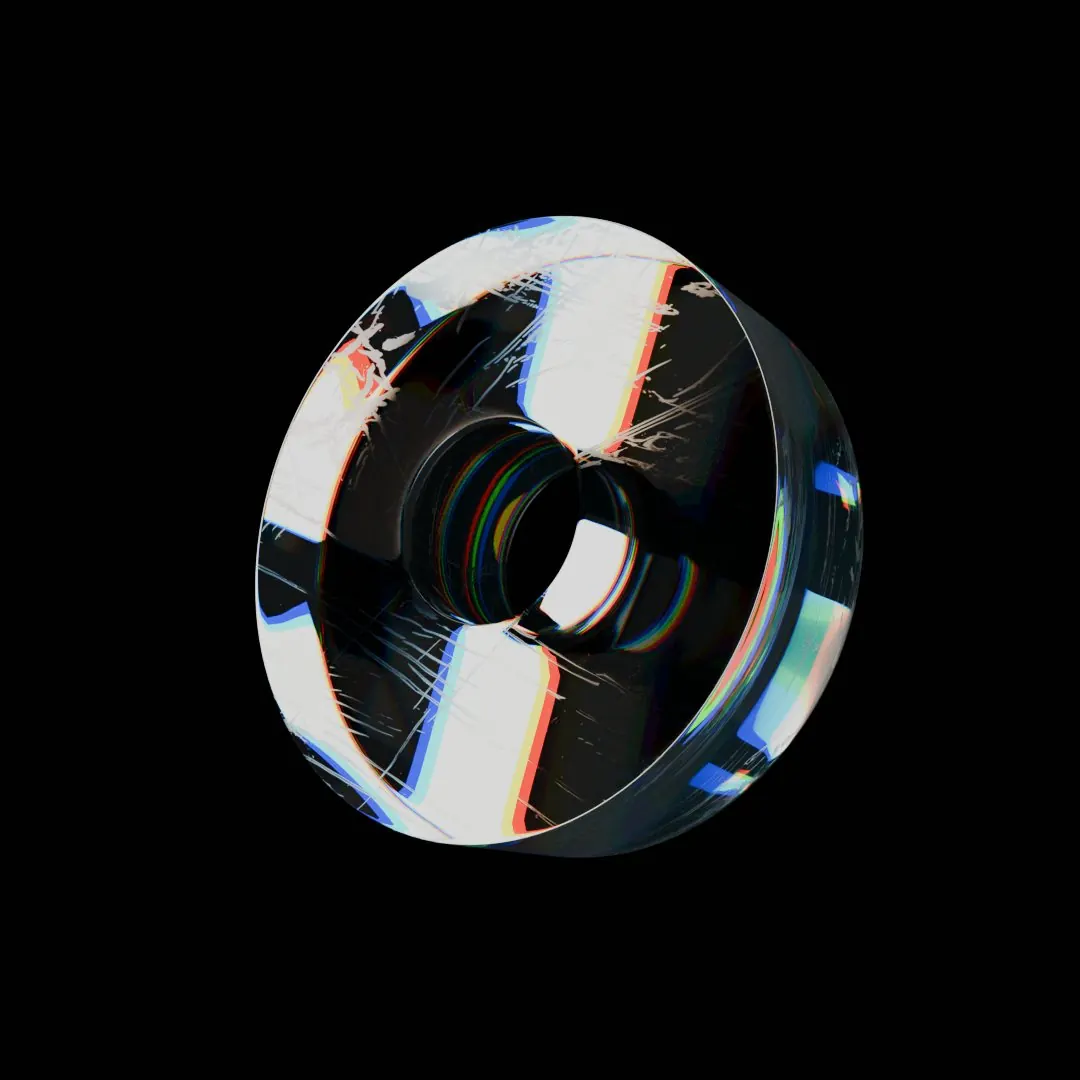
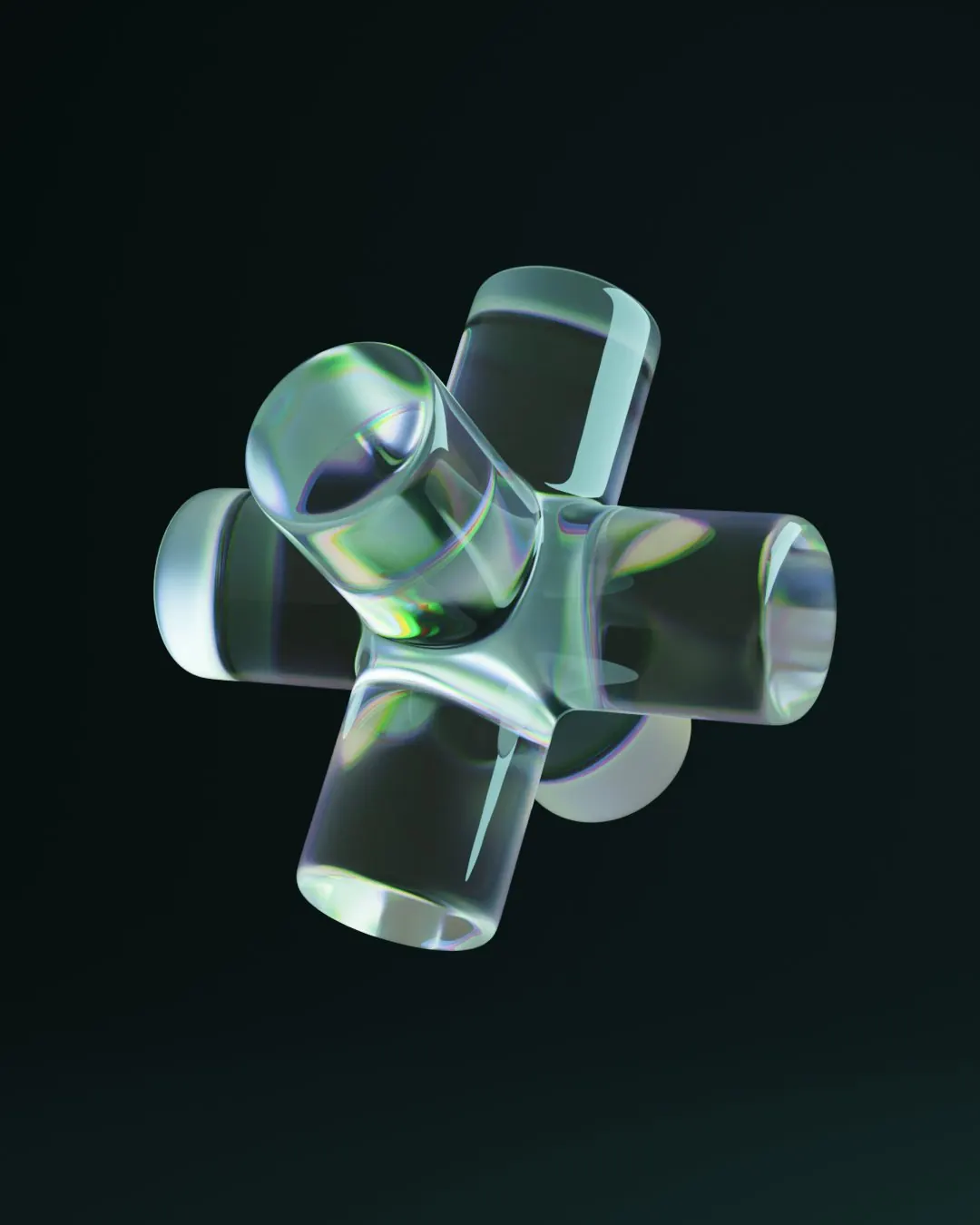
Clean glass looks fake. A little chromatic split and some wear on the surface are what make it believable.
The O
One letter, grown in crystal
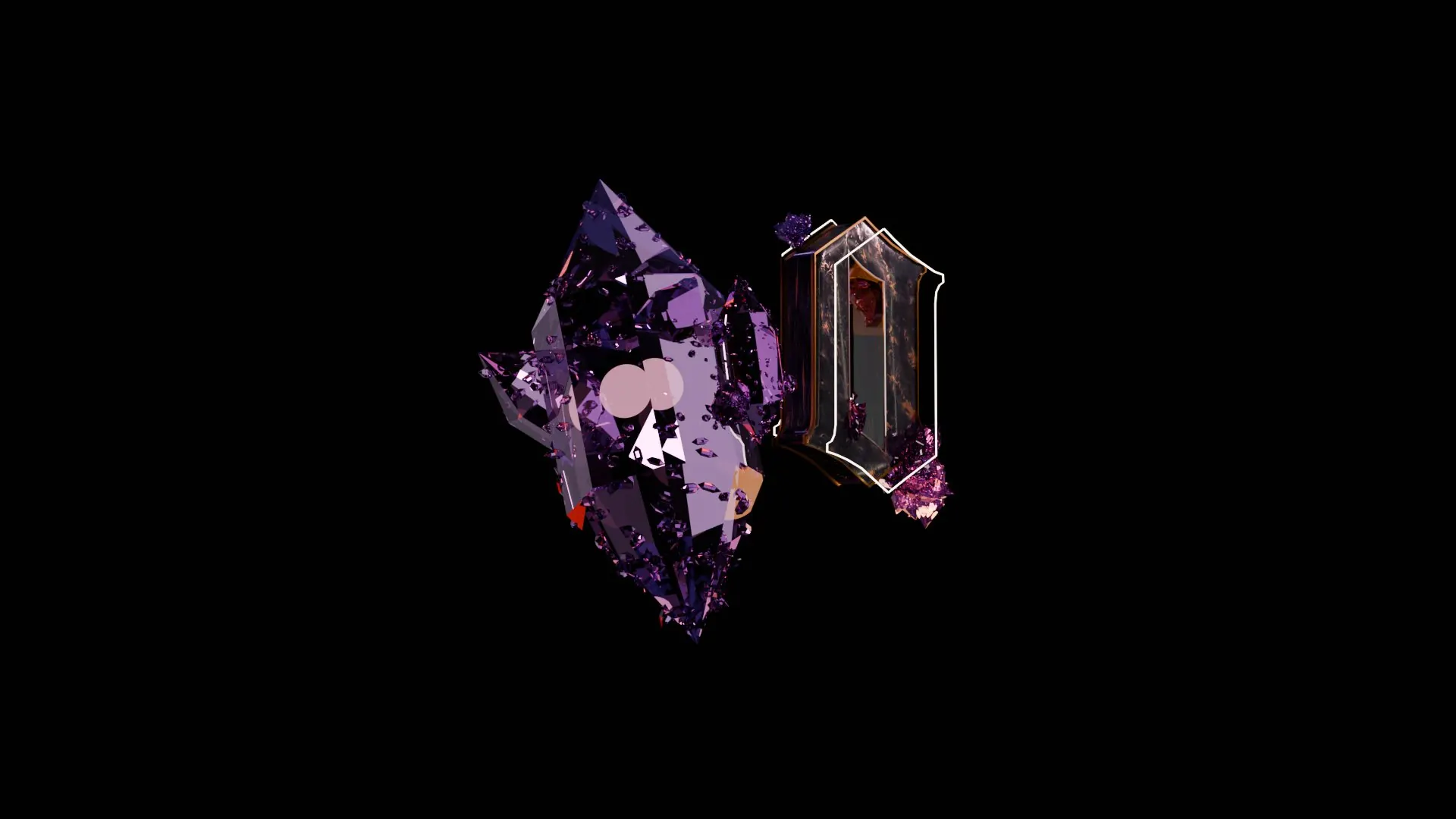
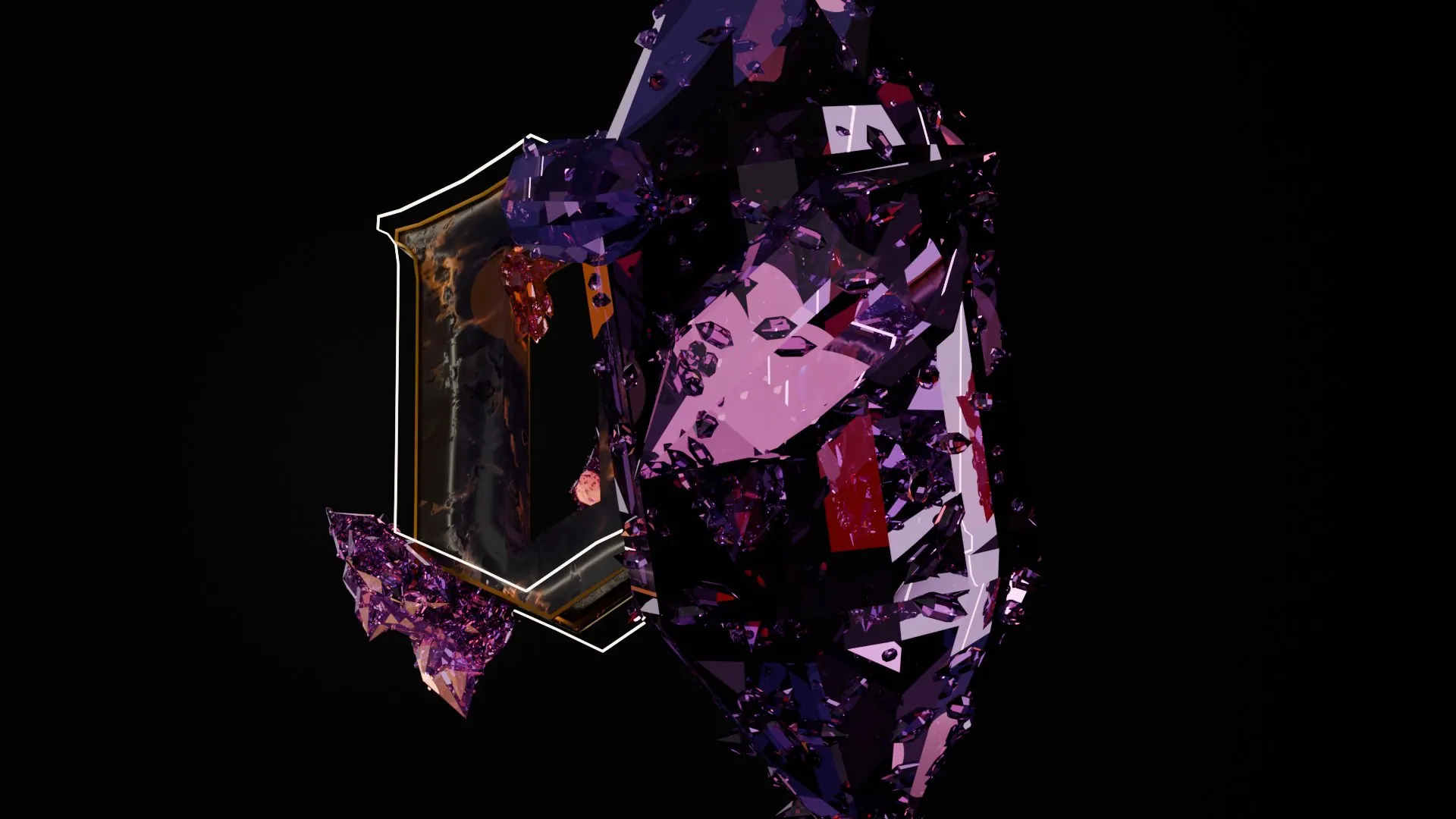
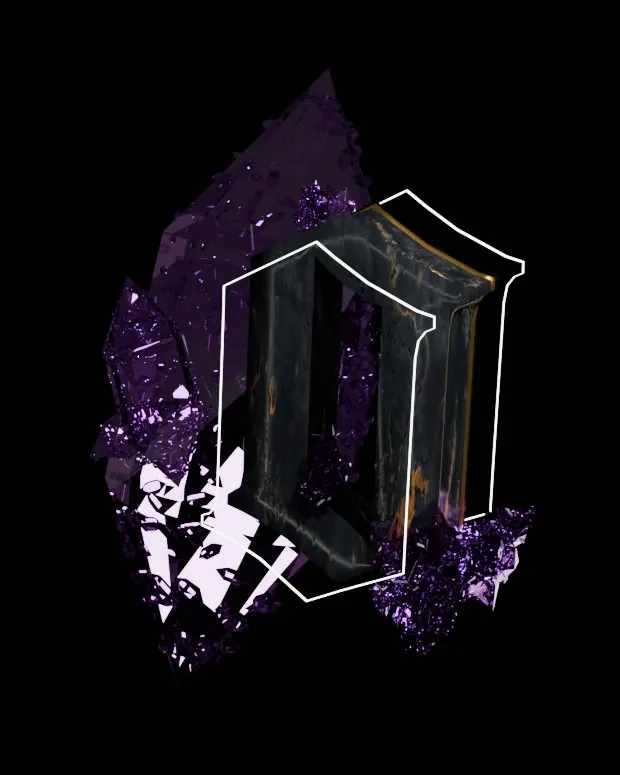
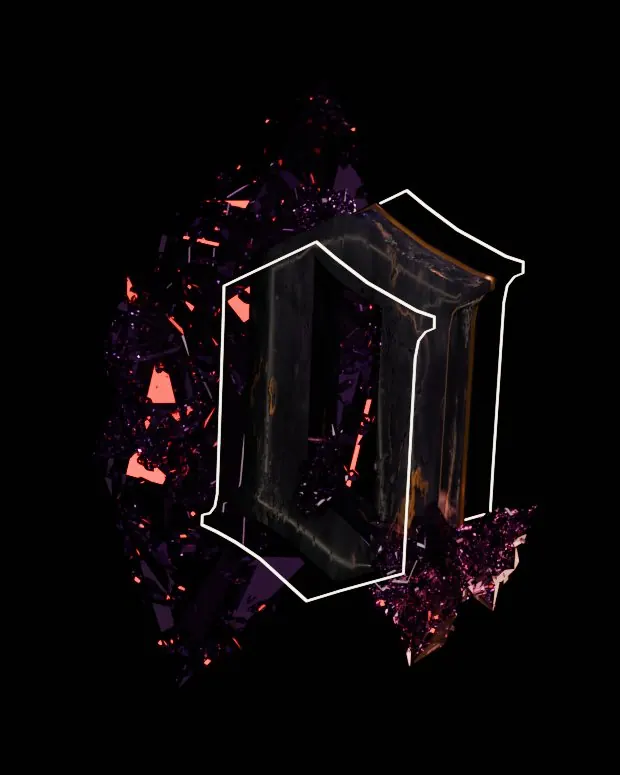
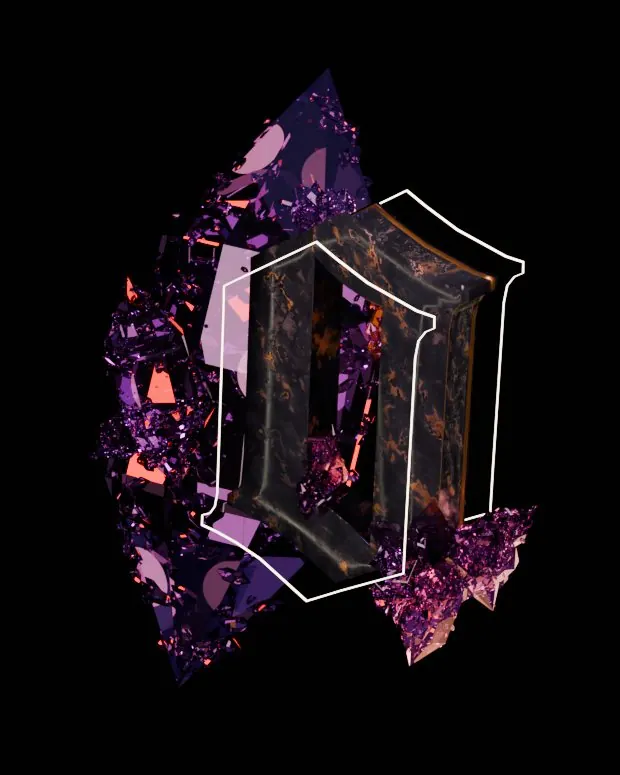
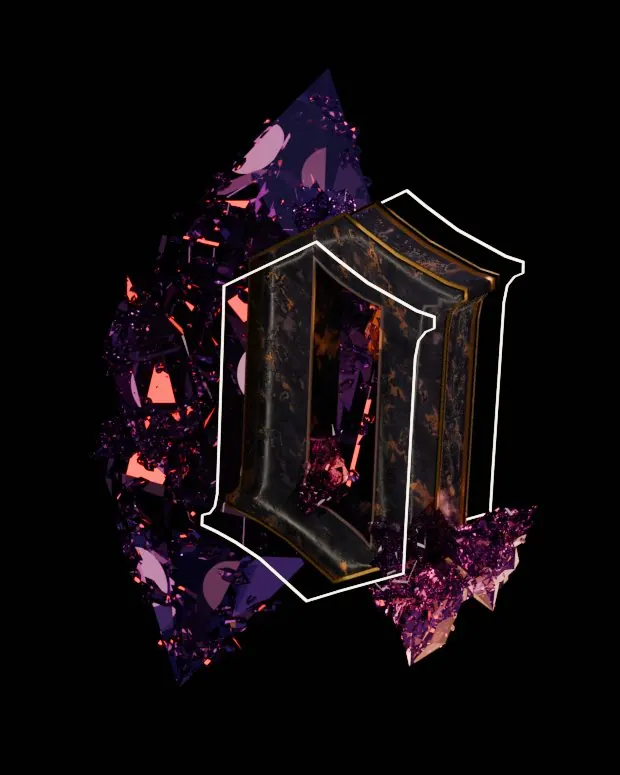
The O of the OMENS mark rebuilt in dark marble with gold veins, held by a cluster of amethyst. The white outline keeps the flat logo present inside the 3D scene.
Close-up
The camera goes in
Up close the crystal turns abstract: shards, red reflections and the marble’s gold leaf.
Process
Behind the render, a node tree
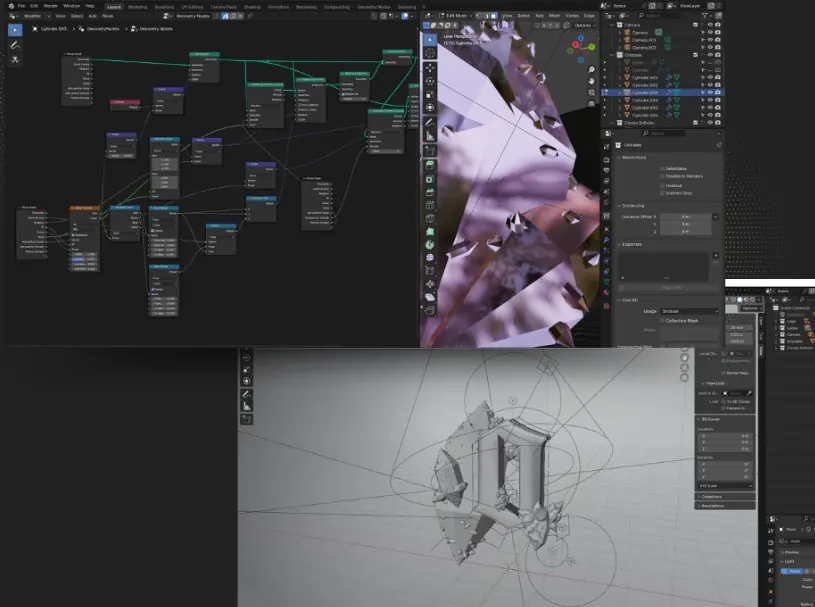
The crystals aren’t modelled one by one. A geometry nodes setup scatters and scales the shards around the letter, so each change in the tree gives a new cluster. The outline is Line Art, drawn from the same geometry.
Look development
Four passes on the same scene: we changed the light and the material before choosing the final frame.
Simulation
Hair, cloth and soft forms
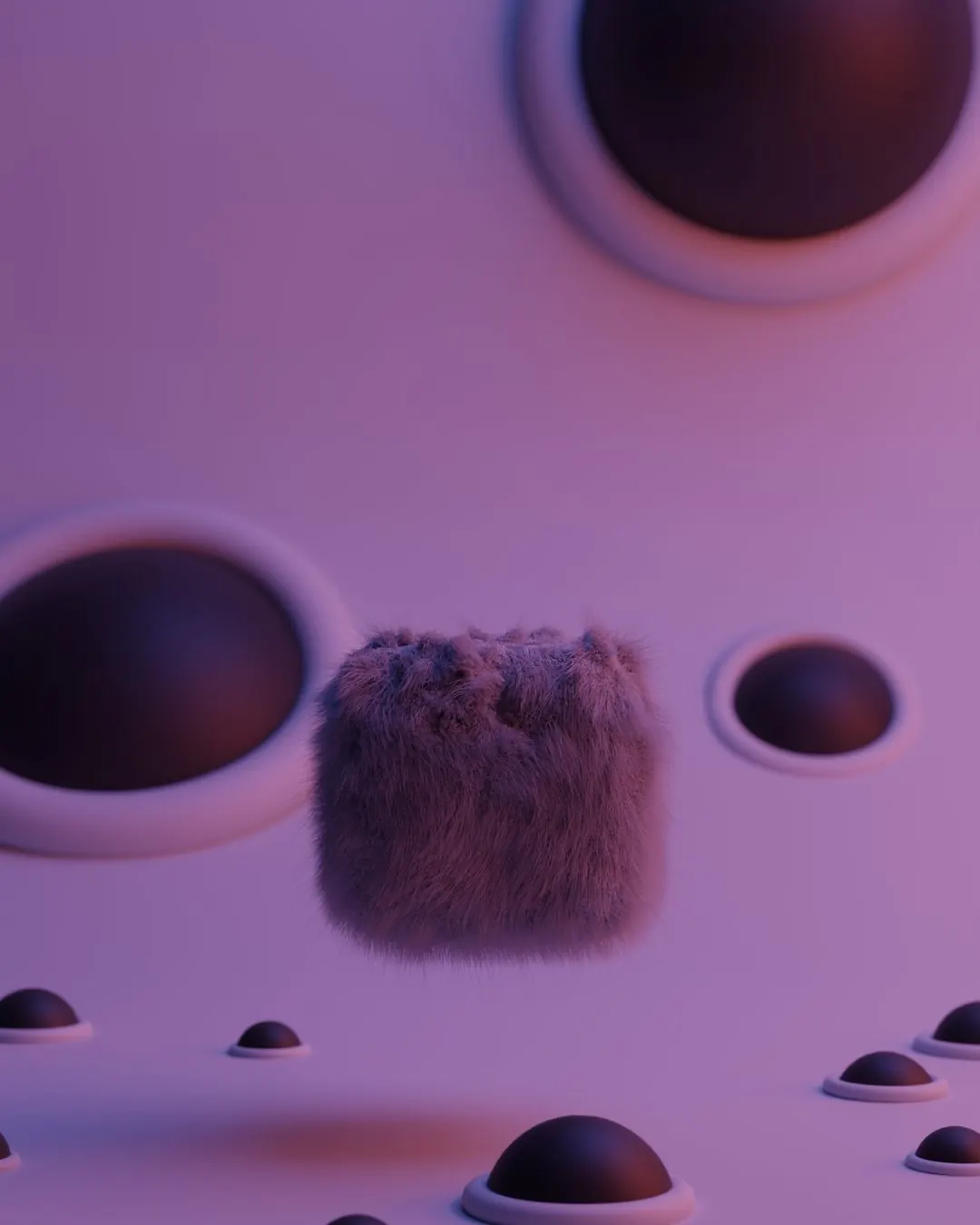
Thousands of strands that respond to the light instead of hard surfaces. Here the work is in the settings: density, length, how much the fur gives.
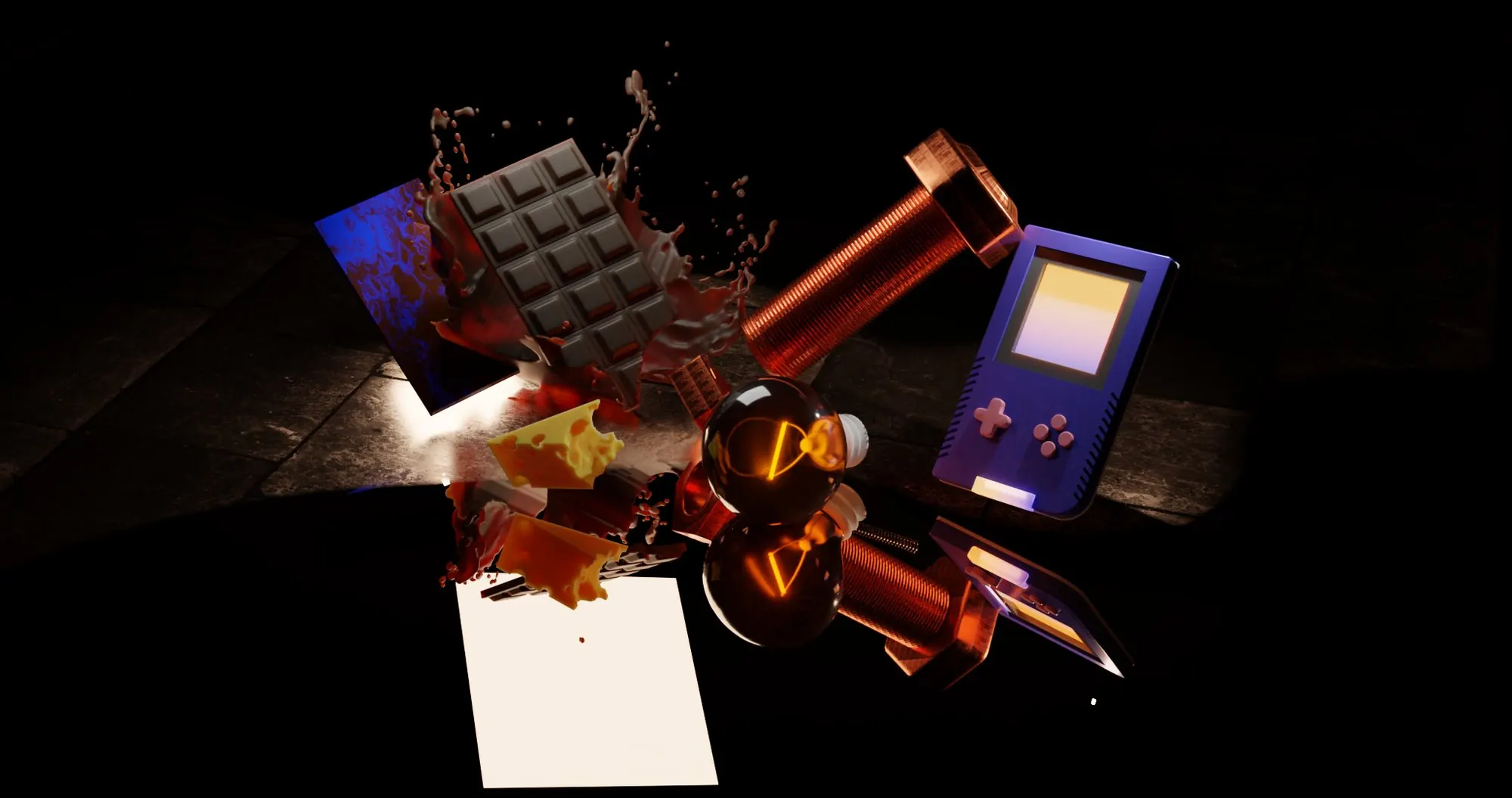
Daily practice, day 4: one light, many materials.
Early studies
Where it started
First lessons in depth of field, scale and color. We keep them here as a record of the road.

Toolkit
What goes into a frame
The same tools serve covers, posters and brand pieces.
- ModelingBlender
- Geometry nodesScatter · Instancing
- MaterialsGlass · Marble · Crystal
- SimulationHair · Fluids · Cloth
- RenderCycles · Eevee
- FinishingPhotoshop · Color